
Furniture Leather Guide
Each type of leather has its own characteristics. Understanding these differences
will help you make the best decision when choosing leather for your furniture.
When selecting leather, there are several factors to consider.
Do you love the look of patina and natural wear? Do you prefer leather that stays more uniform over time?
Is easy maintenance a priority in your home?
This guide will walk you through the main leather types, their advantages, and what to expect.
Leather only gets better with time, and so will your knowledge after reading this (hopefully).
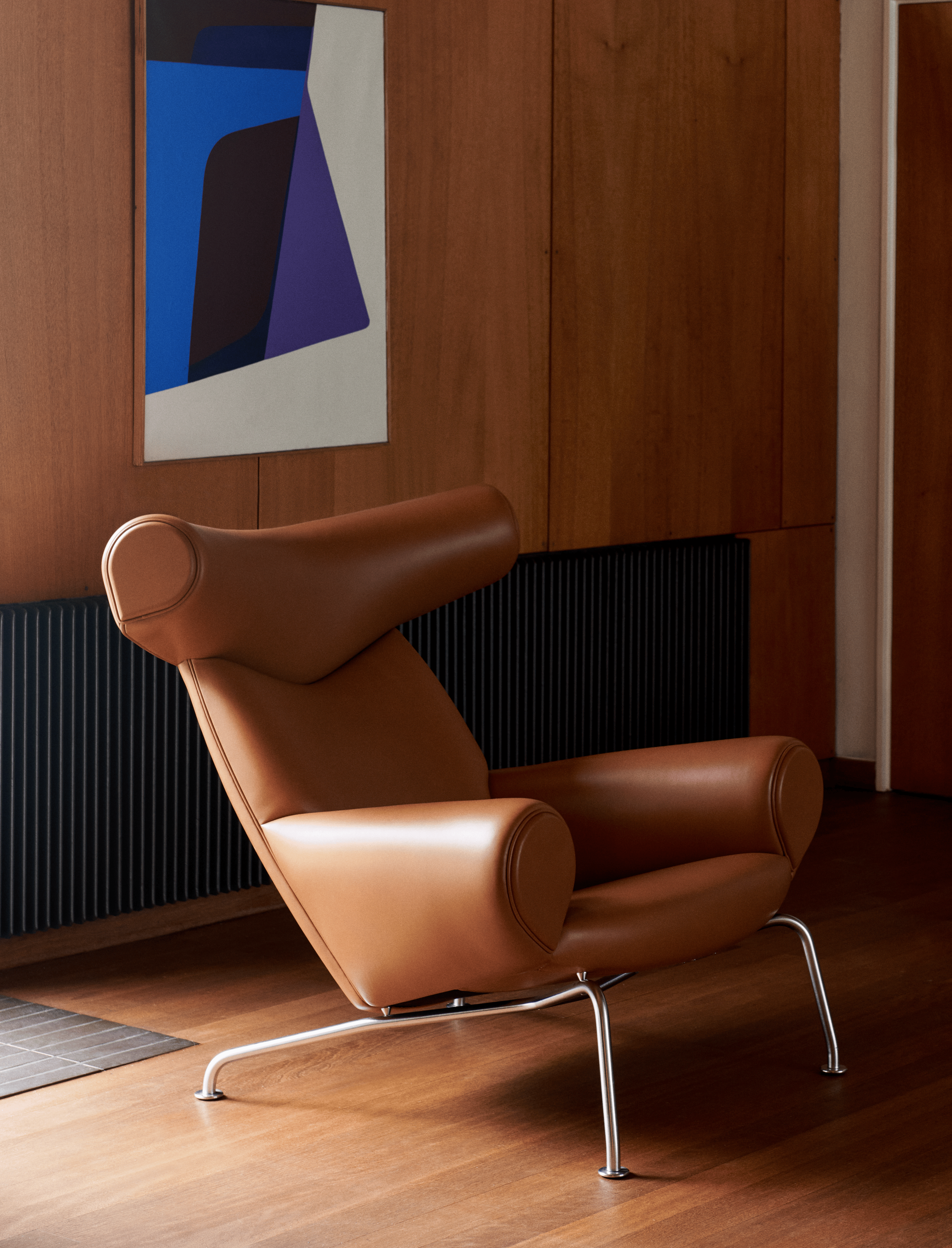
MAIN CATEGORIES
ANILINE
SEMI-ANILINE
PROTECTED
NUBUC
Photo from Fredericia Furniture
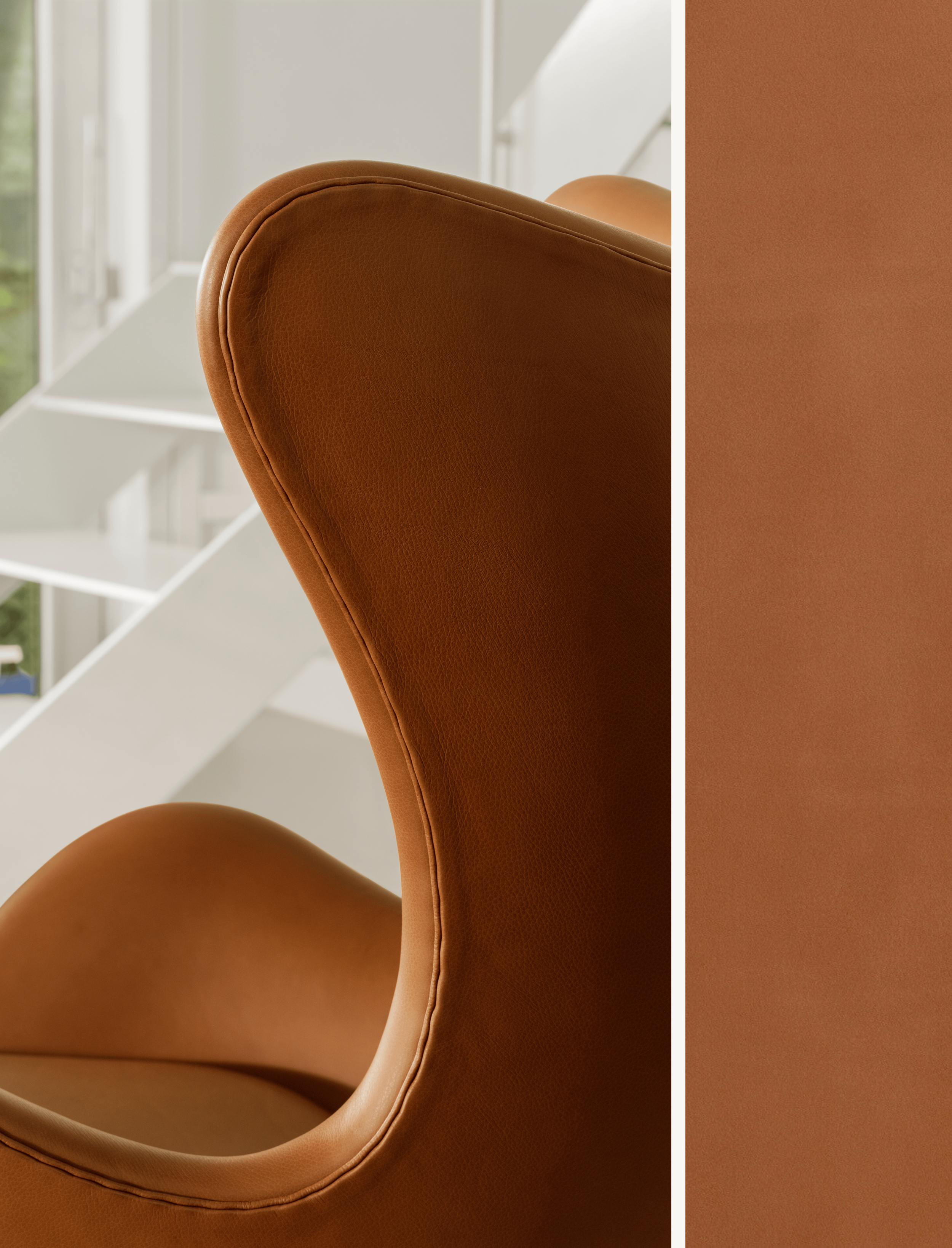
ANILINE LEATHER
Aniline leather is known for natural beauty and exclusivity.
Only about 5% of raw hides meet the quality standards
required for this limited material.
Because the surface is untreated and the pores are open,
the leather is extremely soft and breathable.
Natural markings such as scars, wrinkles,
and grain variation are visible but is also what
makes each piece of leather unique.
With time Aniline Leather develops patina.
Dyed leather will fade with sunlight
The leather will darken with use
In busy households with kids or pets
patina will appear faster.
This evolution is part of its beauty,
but it also means the leather requires a bit more care.
SUITED FOR
Design Focused Interiors
Lower to Moderate Traffic Areas
Homes Where Patina is Appreciated
Grace Leather from Fritz Hansen
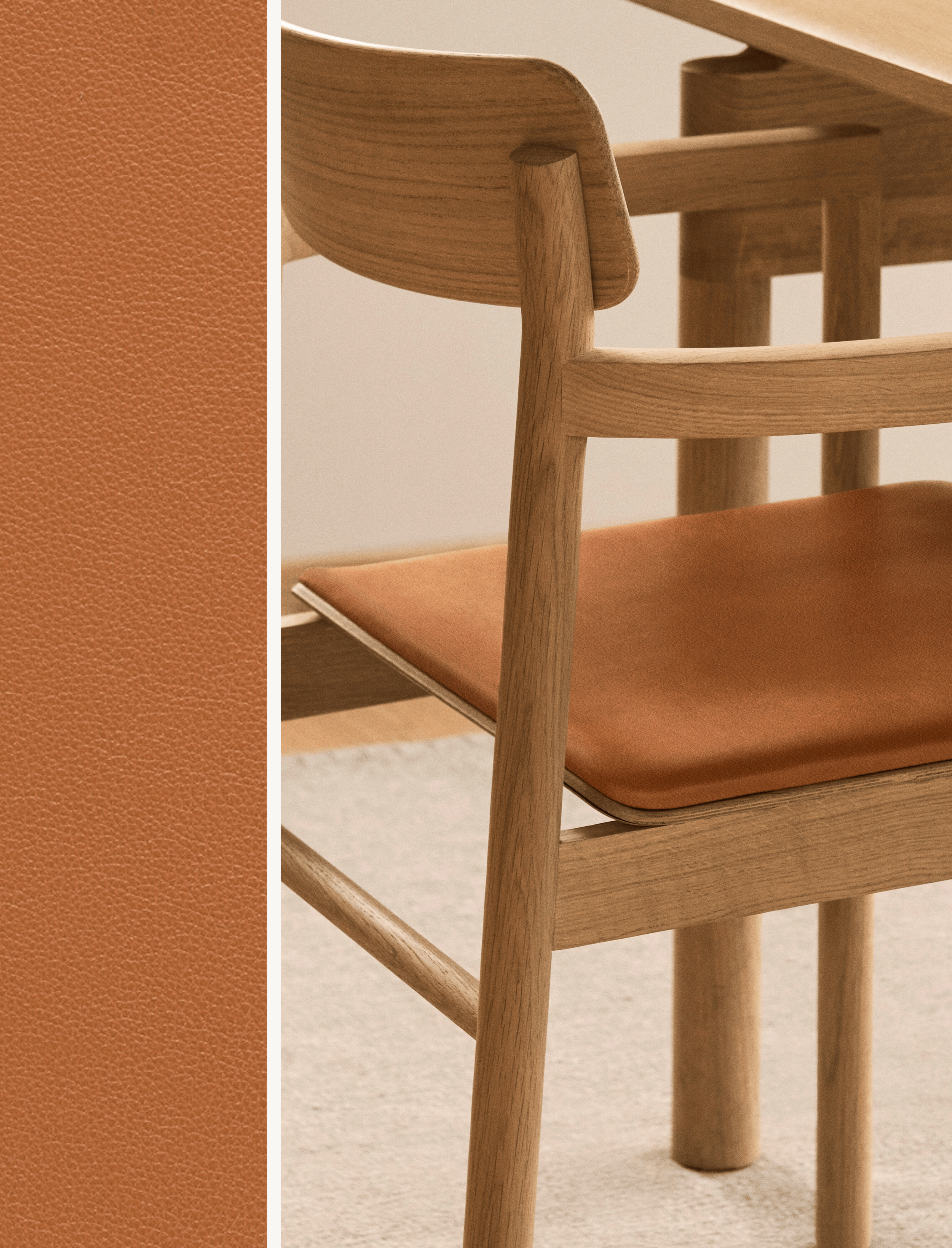
SEMI ANILINE LEATHER
This leather type falls between natural beauty and everyday practicality. About 10-15% of leather meets the standards for this leather type. It has a light surface protectant, this enhances the leathers resistance to stains and makes for easier maintenance.
Despite its surface finish, it still keeps the natural look and markings of the leather, comfort and softness.
SUITED FOR
Everyday living
Homes that want a natural look
Needs for easier care
Moderate traffic environments
Omni Leather from Fredericia Furniture
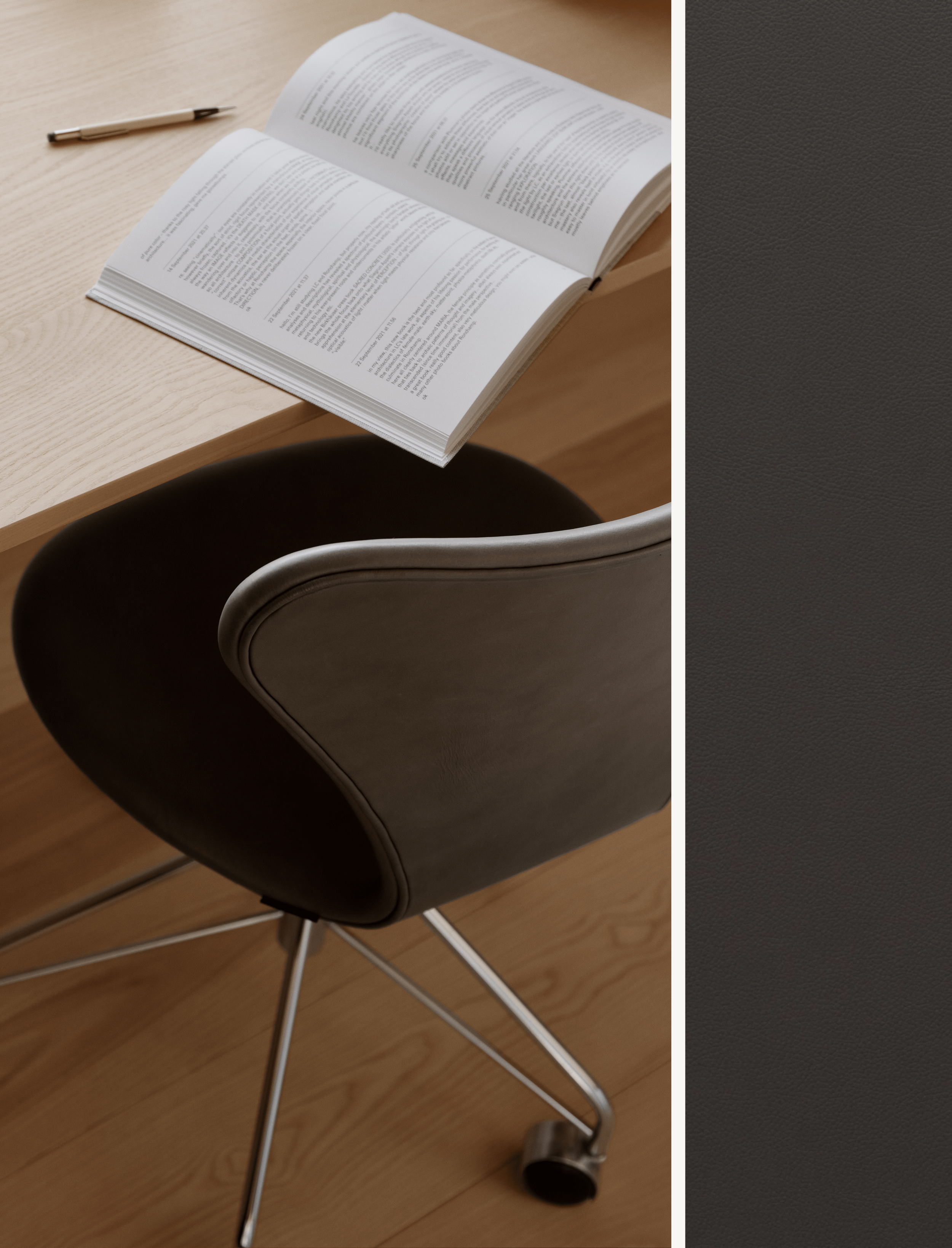
PROTECTED
LEATHER
This is the most durable and low maintenance option of natural leathers. Protected leather goes through substantial surface and coloring treatment. The top grain is buffed away to remove any natural markings, this gives the surface a uniform look.
Even though protected leather is good for its durability and easy maintenance. It does not acquire the same breathability and softness as aniline and semi aniline leather.
SUITED FOR
High Traffic Areas
Families With Children or Pets
Homes Prioritizing Durability and Easy Care
Essential Leather from Fritz Hansen
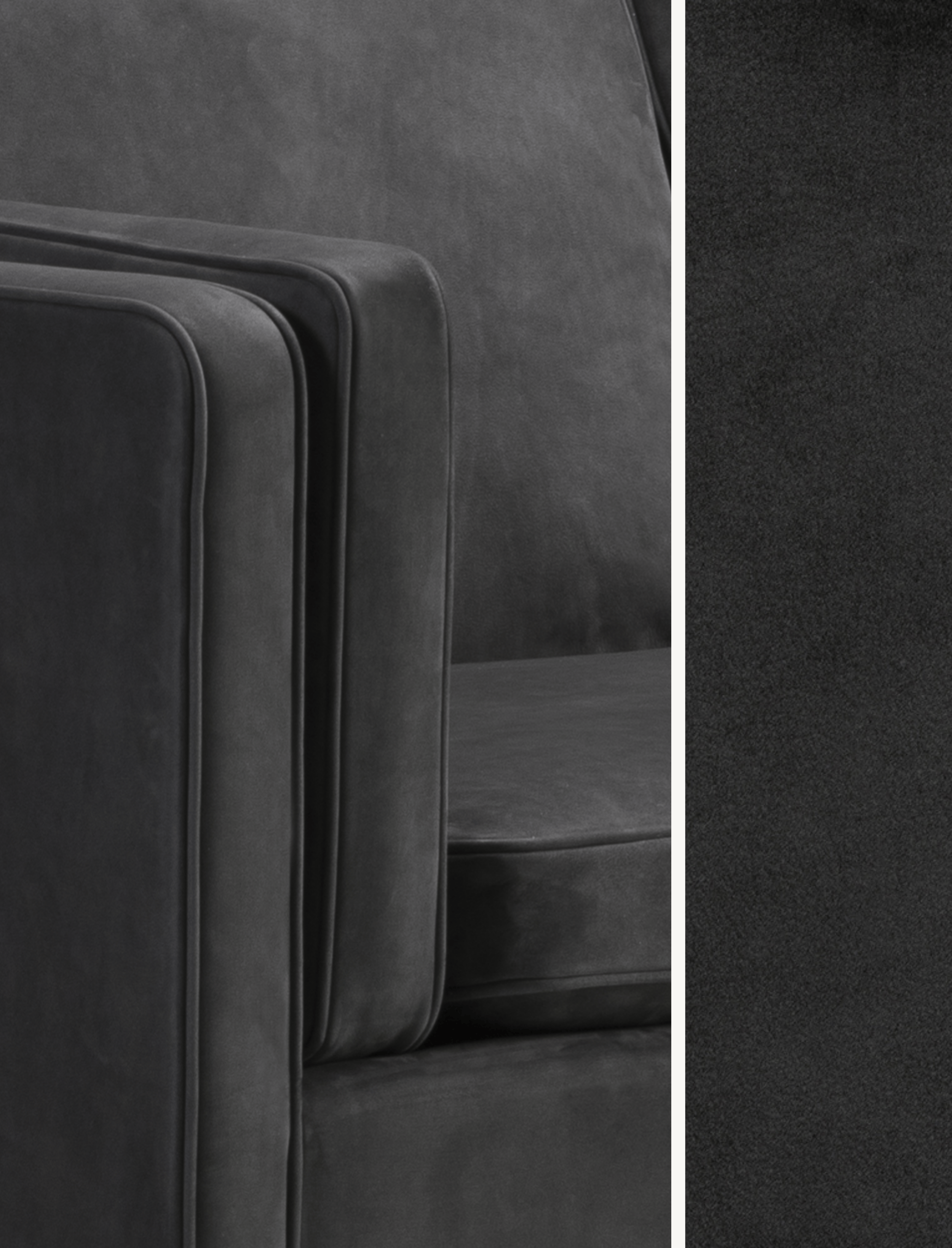
NUBUCK
Nubuc has a soft and velvet like surface, and looks similar to suede leather but is way more durable. Nubuc leather is very thick, which makes it less prone to ripping or deterioration.
It's created from top grain leather that's been lightly sanded or buffed to remove its upper layer. Nubuc gives a luxurious expression to any furniture, and is very soft compared to other leathers. It requires a high level of maintenance as it`s very susceptible to water and stains.
SUITED FOR
Design Focused Interiors
Lower to Moderate Traffic Areas
Households with a high budget
Nubuc Leather from Fredericia Furniture
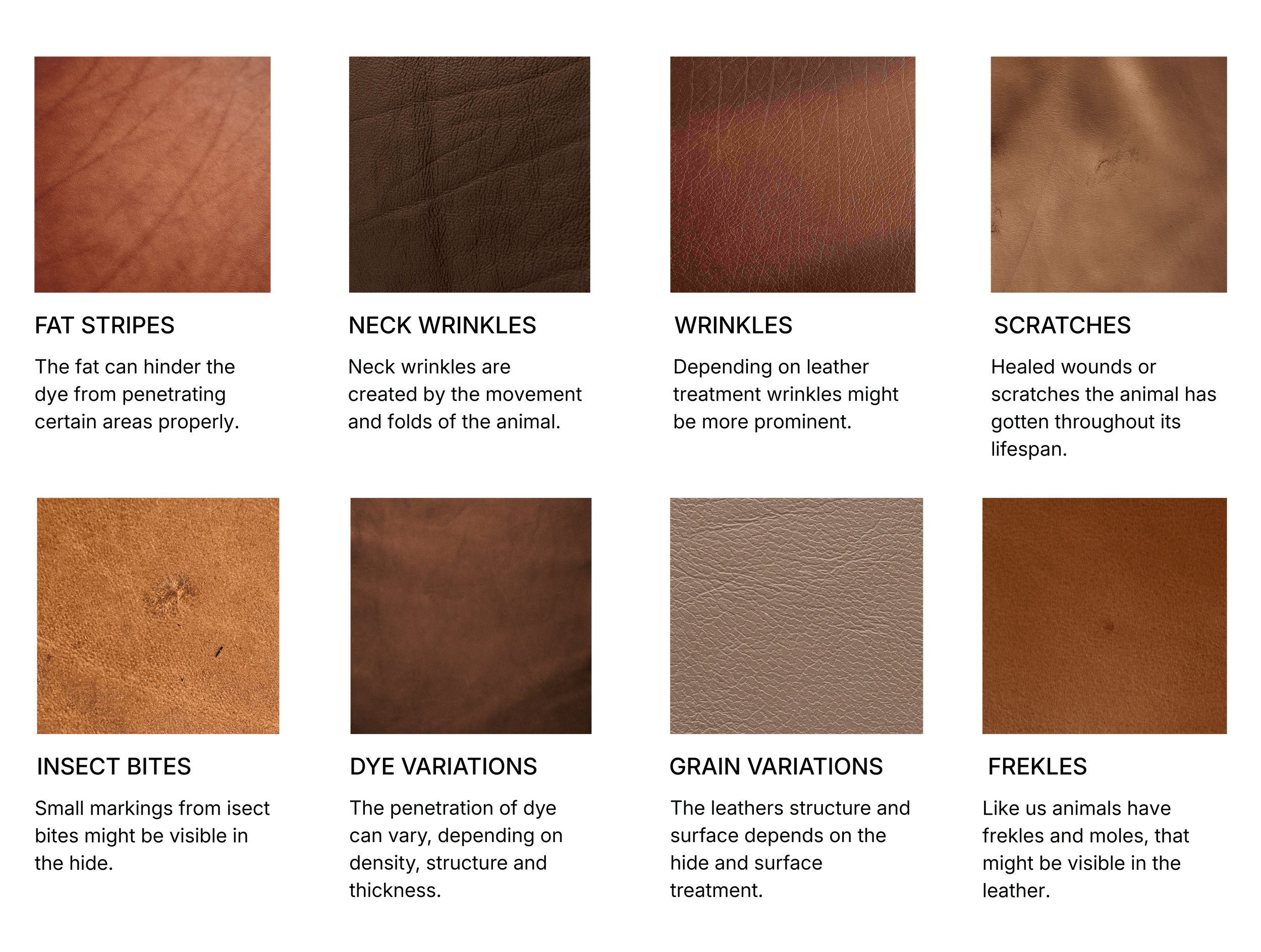
NATURAL MARKINGS
The surface of each hide tells a story about the animals,
and carries markings from its experiences making
each hide unique and full of character.
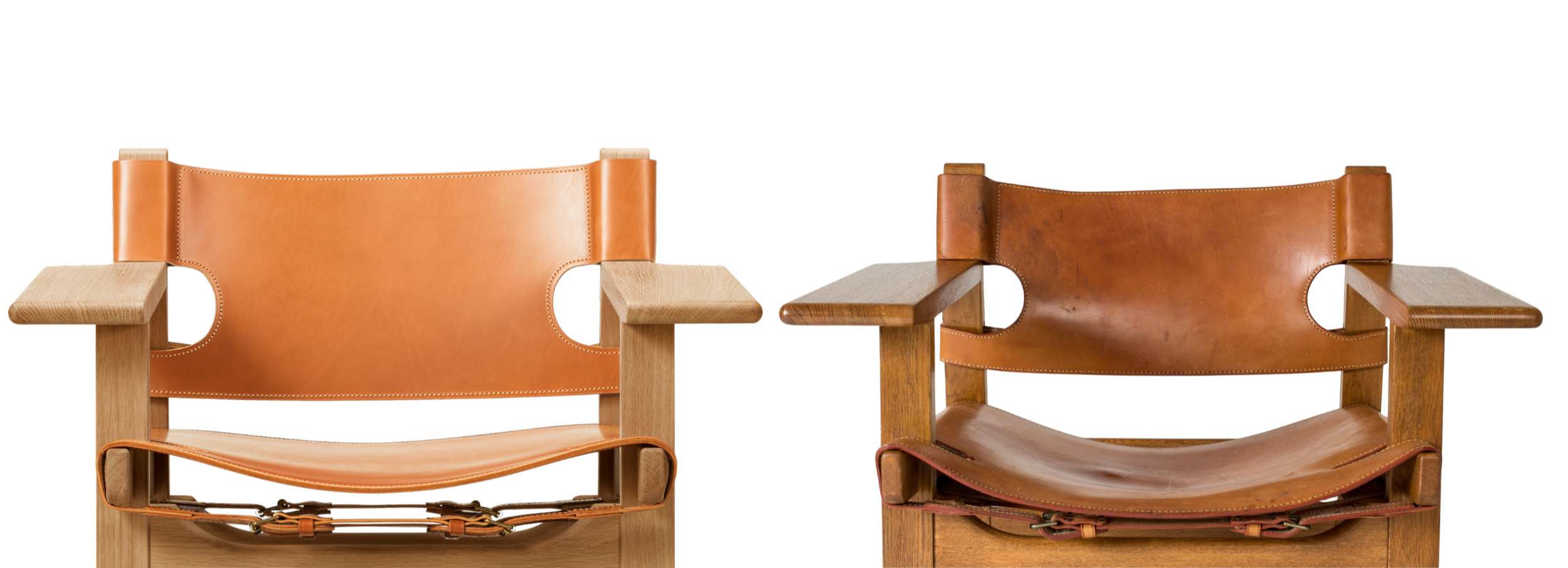
PATINA
Patina develops over time with usage. It appears on aniline and semi-aniline leather types.
Patina develops from stains, sun and from the fat on our hands and bodies.
Some people love it and some people hate it, it`s all up to personal preference.
In the photo underneath you can see a new Spanish Chair and one from the 1960s.
The leather has developed this beautiful and rich brown color.
WHAT KIND OF LEATHER WORKS FOR ME?
If you`re unsure about what leather to choose
you should ask yourself these questions.
Do you Prefer a Natural or Uniform Look?
How Important is Easy Maintenance?
Do You Have Children or Pets?
How Exposed Will it Be to Sunlight?
Do You Like Patina?
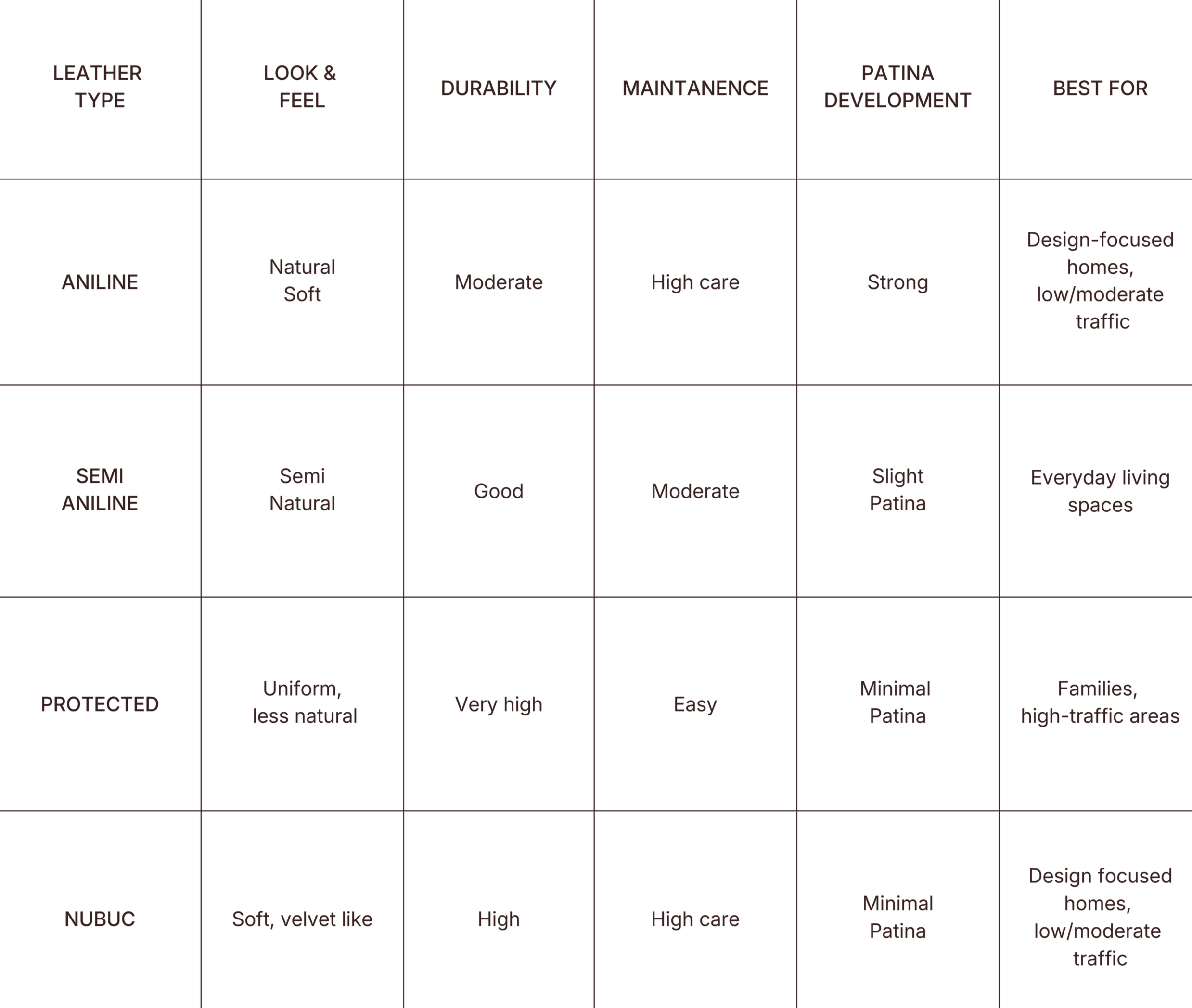
Answering these questions, and comparing it to the chart
should help guide you in choosing a leather that suits your lifestyle,
needs and expectations.
Choosing leather is about finding the type that suits you, and your way of living.
When you truly understand the different leathers and their properties,
you can buy new furniture with confidence and avoid mistakes.
If you`re furnishing a home that`s meant to be lived in (not just looked at),
the right material knowledge makes all the difference.
Løve from,
Kristine
